KB to MB

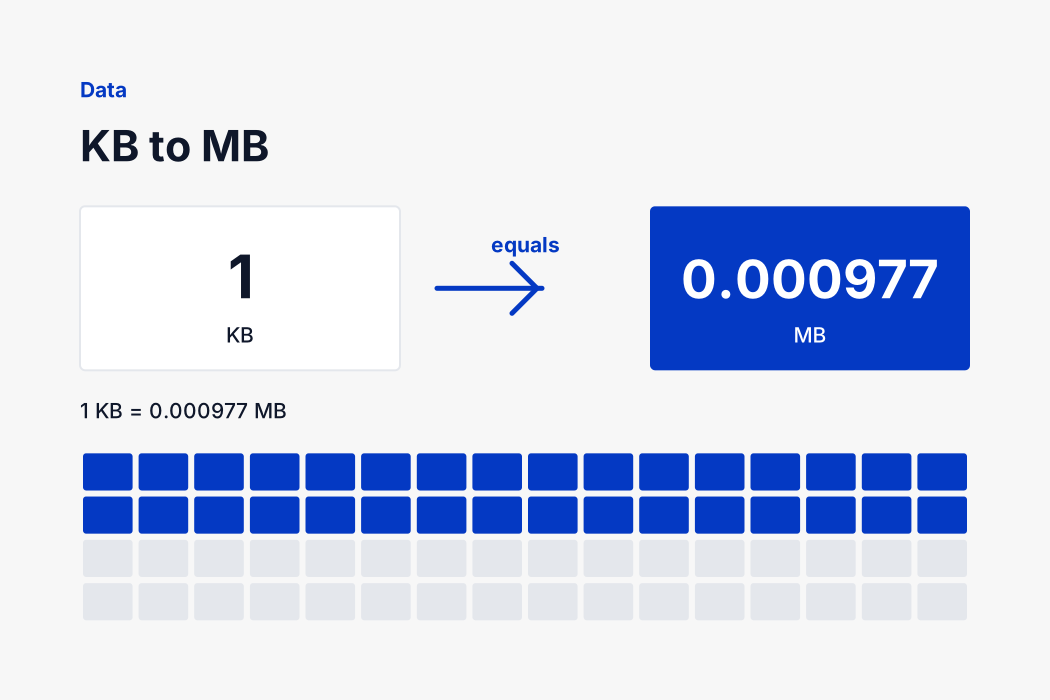
1 KB = 0.000977 MB

Exact factor Nothing uploaded Works offline No sign-up
KB
MB

1 KB = 0.000977 MB

Quick values

Upload limits are where this matters

Most people converting kilobytes to megabytes are staring at an upload form. The form says the file must be under 2 MB, the file properties say 2048 KB, and the question is whether that passes.

At 1024 kilobytes to the megabyte, 2048 KB is exactly 2 MB, which usually fails a limit written as "under 2 MB". Aim for 2000 KB or less and you clear it either way, whichever convention the server uses.

This page uses the binary convention, 1024, because that is what operating systems display and what most upload validators check against. Where a figure came from a network or storage vendor it is more likely to be decimal, and the chart below gives both.

A file properties window listing a document size in kilobytes and megabytes
How it works

Type, read, done

There is no convert button and no page reload. The answer updates on every keystroke.

1

Type your figure

Put a number of kilobytes into the left box. Decimals, negatives and very large values all work.

2

Read the answer

The megabytes figure appears as you type, along with the full sentence underneath so you can copy it whole.

3

Adjust or reverse

Change the decimal places, tap a quick value, or press swap to convert megabytes back to kilobytes.

The formula

This page uses the binary convention, where one megabyte is 1024 kilobytes, which is how operating systems and upload forms count file sizes.

MB = KB × 0.0009765625

To go the other way: KB = MB ÷ 0.0009765625

Worked through with a real number, 1,024 KB becomes 1 MB. The calculation at the top of the page runs the same arithmetic as you type, to as many decimal places as you ask for.

Kilobytes to Megabytes conversion chart

Every value below is calculated with the exact factor rather than a rounded one, then displayed to 4 decimal places. Read it on screen or print the page, since the chart carries no scripts and needs no connection.

KilobytesMegabytesKilobytesMegabytes
1 KB0.001 MB1,000 KB0.9766 MB
10 KB0.0098 MB1,024 KB1 MB
50 KB0.0488 MB2,048 KB2 MB
100 KB0.0977 MB5,120 KB5 MB
200 KB0.1953 MB10,240 KB10 MB
500 KB0.4883 MB51,200 KB50 MB
512 KB0.5 MB102,400 KB100 MB

The values people look up most

These are the kilobytes figures that get searched for by name, worked out with the exact factor rather than a rounded one.

  • 1 KB is 0.001 MB.
  • 50 KB is 0.0488 MB.
  • 200 KB is 0.1953 MB.
  • 512 KB is 0.5 MB.
  • 1,024 KB is 1 MB.
  • 5,120 KB is 5 MB.

Anything not on this list can be typed into the converter at the top of the page, which handles decimals, very large numbers and negative values without rounding until you ask it to.

Typical file sizes

Roughly what a given number of kilobytes represents in practice.

  • 50 KB is 0.049 MB, a compressed passport photograph for a form.
  • 200 KB is 0.195 MB, a web page image.
  • 512 KB is 0.5 MB, a short PDF document.
  • 1024 KB is exactly 1 MB.
  • 5120 KB is 5 MB, a phone photograph at full resolution.
  • 10240 KB is 10 MB, a common attachment ceiling.

If a form has rejected your file, our image compressor can bring a photograph under any limit in kilobytes without you having to guess at a quality setting.

Why computers count in twos

A computer addresses memory with binary numbers, so the natural sizes are powers of two: 512, 1024, 2048. When early engineers needed a name for 1024 bytes they borrowed the metric prefix kilo, which properly means a thousand. The four bytes of difference did not seem worth arguing about at the time.

It compounds. By the time you reach terabytes the two readings differ by ten percent, which is why converting kilobytes to megabytes gives one answer on a drive box and another in your file manager.

The standards body responded in 1998 by inventing kibibyte, mebibyte and gibibyte for the binary versions, leaving the metric prefixes to mean exactly what they say. Linux adopted them, almost nothing else did, and the ambiguity has quietly survived for another quarter of a century.

Binary and decimal, and why the gap grows

The difference between the 1024 and 1000 conventions is 2.4 percent at the kilobyte level and it compounds at every step. By the megabyte it is 4.9 percent, by the gigabyte 7.4 and by the terabyte 10. That is why a small drive looks about right and a large one looks noticeably short.

Nothing on your machine is wrong when the two disagree. The manufacturer counted in powers of ten because the metric prefix says so, and the operating system counted in powers of two because that is how memory is addressed. Both numbers describe the same physical bytes, and this page converts kilobytes to megabytes using the binary reading your file manager uses.

When a figure matters, note where it came from. File managers, upload validators and memory specifications use binary. Drive packaging, cloud storage plans and mobile data allowances use decimal.

Nothing is sent anywhere

This converter is a few lines of arithmetic running in your browser. There is no server call when you type, no account to create and no limit on how many times you use it. Open the page once and it keeps working with the connection switched off, which is genuinely useful on a building site, in a shop with no signal or on a plane.

That also means the page loads in well under a second and responds as fast as you can type. A converter that posts every keystroke to a server cannot do either of those things, and there is no reason a multiplication by 0.0009765625 should need one.

If you need the reverse direction, the swap button flips the two sides without reloading the page, so you can move between kilobytes and megabytes as often as you like. The decimal places control sits beside it, and both settings apply immediately to whatever number is already in the box.

Checking the answer yourself

Every figure on this page can be verified by hand, which is the point of showing the formula and the factor rather than just printing a result. Take 10,240 KB, apply the formula above, and you should land on the same megabytes figure the converter gives.

If your own calculation differs in the last decimal place, the cause is almost always a rounded factor. Pocket calculators and spreadsheets often carry a shortened version, and over a large number that small difference becomes visible. The converter here uses the full value throughout and rounds only for display, so the number you copy is the number the definition gives.

Where a document, a form or a specification states its own conversion factor, use theirs rather than ours. Some industries deliberately work to a rounded figure for consistency, and matching the paperwork matters more than being marginally more precise than it.

FAQ

KB to MB

The questions people ask most about this conversion.

1024 KB in the binary convention used by operating systems, or 1000 KB in the decimal convention used by some network and storage vendors.

It is exactly 2 MB, which usually fails a limit stated as under 2 MB. Stay at 2000 KB or below to be certain.

500 KB is 0.488 MB in binary, or 0.5 MB in decimal.

Compress it rather than crop it. Our image compressor lets you set a target in kilobytes and finds the highest quality that fits.

Yes, completely. There is no account, no usage limit and no paid tier. The conversion runs in your browser, so it costs us nothing to give you and nothing to run.

It uses the exact defined factor of 0.0009765625 rather than a rounded one, and JavaScript carries about fifteen significant digits. The precision you see is set by the decimal places control, not by any limit in the maths.

Yes. Once the page has loaded, every conversion happens on your device. You can switch off your connection and the converter above will carry on working normally.

No. Nothing you type is transmitted, logged or stored. The arithmetic runs entirely in the page and the values disappear when you close the tab.

Press the swap button between the two boxes. It reverses the direction in place, keeps the number you were looking at and applies the inverse formula.

Yes. The layout stacks on a narrow screen, the number fields open a numeric keypad, and the whole page is a few kilobytes so it loads on a slow mobile connection.

Need a different conversion?

Over a hundred free tools, all running in your browser. Nothing is uploaded and nothing is capped.