WebP Compressor

Free WebP compressor for faster web pages.

Free, no limit Nothing uploaded No sign-up Works on mobile

Drop your images here

JPG, PNG, WebP, HEIC and BMP. Nothing is uploaded.

Choose files
How it works

Three steps, about two seconds

No queue, no account and no upload. Your browser does the whole job.

1

Add your file

Drop an image in or pick it from your device. JPG, PNG, WebP, HEIC and BMP all work.

2

Check the target

100 KB is already selected. Change it or tap a preset if you need something else.

3

Download

The result is ready straight away, with the original size and the saving shown beside it.

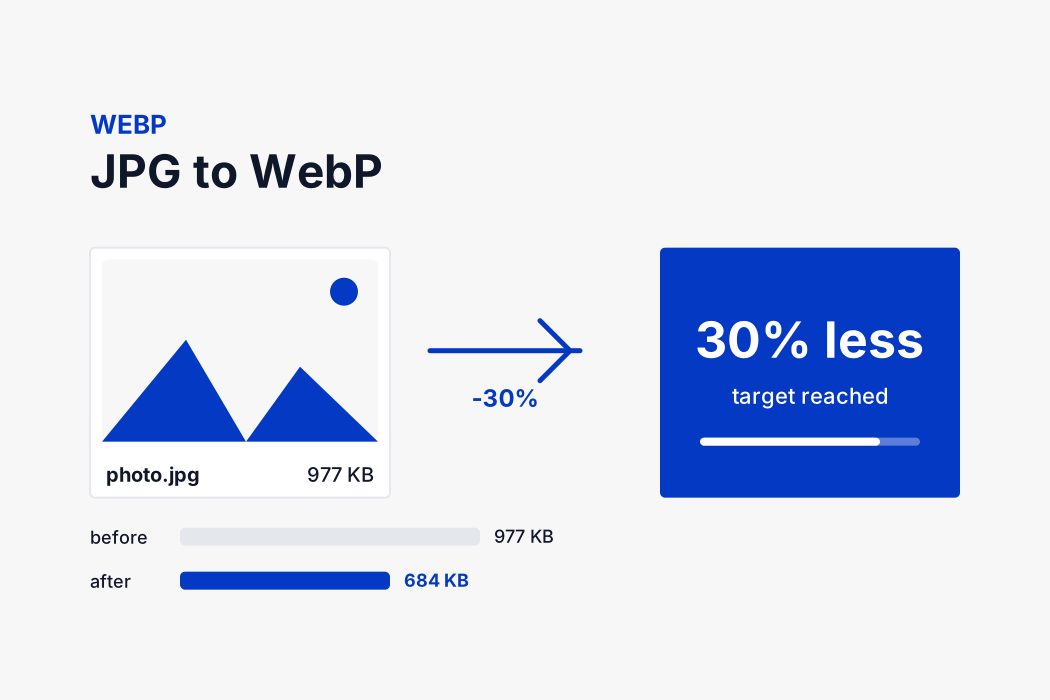
Roughly thirty percent smaller than JPG

WebP is the format to reach for when the image is going onto your own website. At the same visible quality it produces files around a quarter to a third smaller than JPEG, which is a genuine difference to how quickly a page paints.

It also supports transparency, which JPEG does not, so it can replace both of the older formats in most situations. Every current browser has supported it for years.

The catch is everything that is not a browser. Older desktop software, print workflows and a great many government upload portals still reject WebP. Use it for the web and keep JPG for anything you have to submit to somebody else.

Images converted to WebP for a faster loading web page

How the tool reaches 100 KB

WebP has a quality setting like JPEG, so the tool searches it. Your browser decodes the image, redraws it on a canvas and encodes it at a high quality first. If that already fits under 100 KB, the job is finished.

If it does not, the tool halves the remaining range and tries again, then again, closing in on the highest quality that still produces a file under your limit. Eight passes land within a fraction of a percent of the ideal setting, and the whole search takes well under a second.

Because WebP compresses roughly a quarter to a third harder than JPEG, the quality it settles on for a given target is noticeably higher than JPEG would manage at the same size. That is the entire reason to use the format.

Only if even a low quality cannot reach the target does the tool reduce the pixel dimensions, and then it repeats the quality search at the new size.

What compression actually discards

Lossy compression sounds like vandalism until you know what it removes. The format splits the image into small blocks and describes each one as a set of frequency patterns rather than as individual pixels. Broad shapes and gradual tones are kept in detail. Very fine texture and sharp noise are stored coarsely or dropped.

It also records colour at a lower resolution than brightness, because human vision is far more sensitive to light and dark than to hue. None of this is visible at normal viewing size until the quality is pushed low, at which point you start to see block edges around detail, colour bleeding around text, and mottling in flat areas such as a plain background.

The search described above exists to stop just before that point.

WebP, JPG or PNG

The output format is selectable above the results, and the right choice depends on where the image is going rather than on what it looks like.

WebP gives the smallest file for a given quality, roughly a quarter to a third better than JPEG, and it supports transparency. That makes it the best choice for anything served from your own website, where the saving turns directly into a faster Largest Contentful Paint.

JPG is the safe choice for anything you submit to somebody else. Every upload portal, every piece of desktop software and every printer accepts it without argument, which WebP cannot claim.

PNG is for graphics rather than photographs: logos, icons, screenshots and line art, particularly when a transparent background matters and the file has to stay pixel perfect.

If you are not certain the destination accepts WebP, use JPG. The saving is worth having, but not at the cost of a rejected upload.

Tips

Getting the best result at 100 KB

Six things that make a real difference to how good a compressed image looks.

Crop before you compress

A passport style photograph should be mostly face. If half the frame is a wall, you are spending your fifty kilobytes describing a wall.

Shrink huge images first

A 4000 pixel wide photo forced into 50 KB looks far worse than the same photo resized to 600 pixels and then compressed. Forms display it small anyway.

Prefer a plain background

Busy backgrounds are full of fine detail, and fine detail is exactly what eats space inside a JPEG.

Start from the original

Every JPEG save loses a little more. Compressing an already compressed screenshot stacks the damage twice over.

Avoid text in the image

Sharp lettering produces the ugliest artefacts at low quality. For a signature, scan it cleanly and keep it large in the frame.

Check the minimum too

Many portals also set a floor, often 10 or 20 KB, to block blank uploads. If your file lands at 8 KB, raise the target a little.

Common upload limits

LimitUsually asked forWhat to expect
10 to 20 KBSignatures and thumb impressionsPerfect for ink on white, tight for a face
50 KBPassport style photographs on Indian portalsVery usable once the photo is cropped to the face
100 KBJob portals, universities, bank KYCComfortable, close to the original
200 KBDocument scans and identity cardsGenerous, text stays readable
500 KB to 1 MBEmail, portfolios, archivingNo visible loss on a normal photograph

How 100 KB looks at different pixel sizes

File size and pixel dimensions work together. The same 100 KB spread across more pixels means less data for each one, so a small image at this target looks better than a large one.

Pixel sizeTypical useResult at 100 KB
200 x 230Exam and government form photographsExcellent, no visible loss
413 x 53135 x 45 mm passport photo at 300 dpiExcellent, no visible loss
600 x 600Profile pictures and general uploadsExcellent, no visible loss
1024 x 768Web content imagesVery good
1920 x 1080Full screen images and wallpapersUsable, some artefacts
4000 x 3000Full resolution phone photographsDimensions will be reduced

Where WebP earns its place

The saving is real, but it only matters in the right context.

  • Website and app images, where every kilobyte is time on the Largest Contentful Paint clock.
  • Images with transparency that would otherwise have to be a much larger PNG.
  • Image heavy pages such as galleries and product listings, where the saving multiplies.
  • Not for upload forms. Portals that check the file type will usually refuse it.

If you are unsure whether the destination accepts WebP, use JPG. The difference in size is worth having, but not at the cost of a rejected submission.

If the upload is still rejected

A rejection after the file is small enough almost always comes down to something other than size.

  1. The extension. Some portals accept only .jpg and reject .jpeg, or the reverse. Rename the file and try again.
  2. The dimensions. Most forms set a pixel size as well as a file size and only complain about one at a time.
  3. A minimum size. Many portals also set a floor, often 10 or 20 KB, to block blank uploads. If your result came in very small, raise the target.
  4. The colour mode. A few systems reject anything that is not standard RGB. Phone photographs always are, but exports from design software may not be.

Doing several files at once

Drop in as many images as you like. Each one is taken to 100 KB independently and a download button appears beside it as it finishes. Once more than one is ready, the download all button packages everything into a single zip archive.

Because nothing is uploaded, a batch does not queue. Your device works through the files as fast as it can decode and re-encode them, which for ordinary photographs is a fraction of a second each.

Your file never leaves your device

This matters more than it sounds. The images people put through a compressor are often identity documents: passport photographs, signatures, scanned cards, bank paperwork. Sending those to an unknown server so it can shrink them and hand them back is a poor trade.

Everything here runs in your browser using the file and canvas APIs built into it. The image is read from disk into memory, processed and returned as a download. It is never transmitted, so there is no copy on a server, no retention window and nothing to delete afterwards. Close the tab and it is gone.

FAQ

WebP Compressor

The questions people ask most about this tool.

For the web, yes. Roughly a quarter to a third smaller at the same visible quality, and it supports transparency. For compatibility with older software and upload portals, JPG still wins.

Every current version of Chrome, Edge, Firefox, Safari, Samsung Internet and Opera, on desktop and mobile. Support has been universal for several years.

Yes. Unlike JPEG it has a full alpha channel, so it can replace PNG for transparent images at a much smaller size.

Many upload systems only accept JPG and PNG. Switch the output format above to JPG and submit that instead.

Yes, with no daily cap, no watermark and no account. Every setting is available to everyone, and there is no paid tier holding anything back.

No. The whole job runs inside your browser. The file is read from your device, processed in memory and handed straight back, so it never crosses the network.

Yes. Open the page in Chrome or Safari on Android or iPhone, tap the drop area and pick an image from your gallery or take one with the camera. The result saves to your Downloads folder.

Yes. Type any number into the target field or tap one of the presets. Anything from a few kilobytes upward works, in either KB or MB.

None that we set. The practical ceiling is your device memory, and most phones handle files well over 100 MB comfortably.

Nothing. It stays exactly where it was. The tool produces a new WebP file and leaves your source untouched.

Yes. A webp image compressor is this page under another name. There is one job here and several ways of asking for it.

Need a different conversion?

Over a hundred free tools, all running in your browser. Nothing is uploaded and nothing is capped.